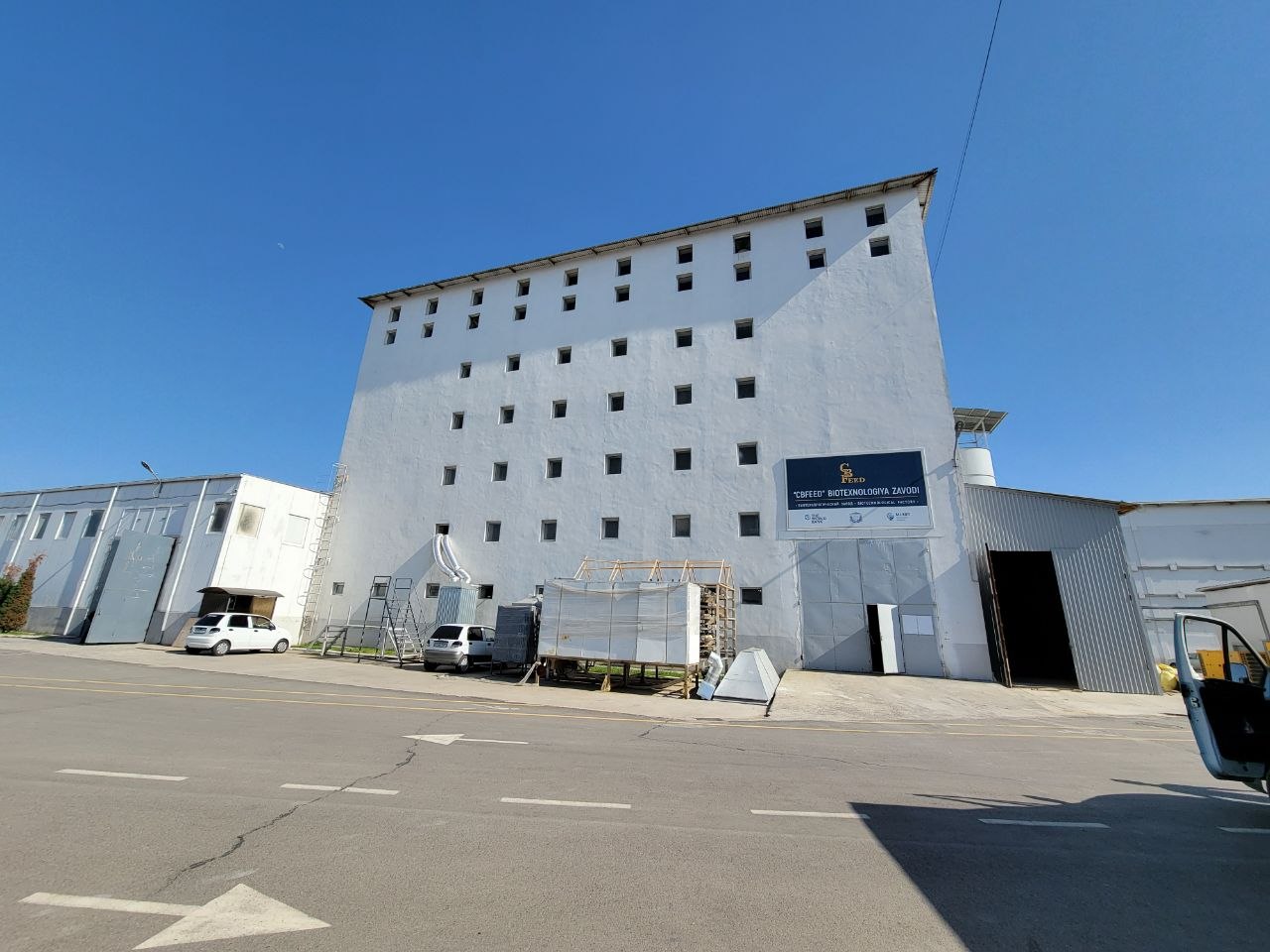
CBFeed Biotech Plant Completed

On June 1, 2025, CBF Animal Nutrition completed construction of its own biotechnology plant for the production of CBFeed feed additives. The project was carried out with financial support from the World Bank under the MUNIS program.

The new production facility marks a key milestone in CBF Animal Nutrition’s transition from development and testing to industrial-scale manufacturing of its proprietary line of biotech feed additives.

Industrial biotech production

The plant is designed to produce CBFeed, CBFeed Forte, and other biotechnological feed products. Its projected capacity at launch is up to 300 tons of product per month.

The production site is equipped with its own quality-control system, including microbiological and chemical laboratories, allowing key parameters of raw materials, the production process, and finished products to be monitored.

Uzbekistan’s first industrial biotech plant

CBF Animal Nutrition positions the new facility as the first industrial bio-feed plant in Uzbekistan specializing in the production of biotechnological components and feed additives.

Production is based on a patented technology of deep biofermentation of rice husk using microbiological cultures. It makes it possible to convert agricultural waste into functional components for animal and poultry nutrition.

From concept to industrial production

The plant’s construction became one of the key outcomes of the CBFeed project, backed by the World Bank. The resulting infrastructure will make it possible to increase production volumes, ensure consistent quality control, and lay the foundation for further scaling of the product across markets in Uzbekistan and beyond.

For CBF Animal Nutrition, launching its own biotech production is a step up to a new level: from developing a patented technology and running production trials to full-scale industrial output.
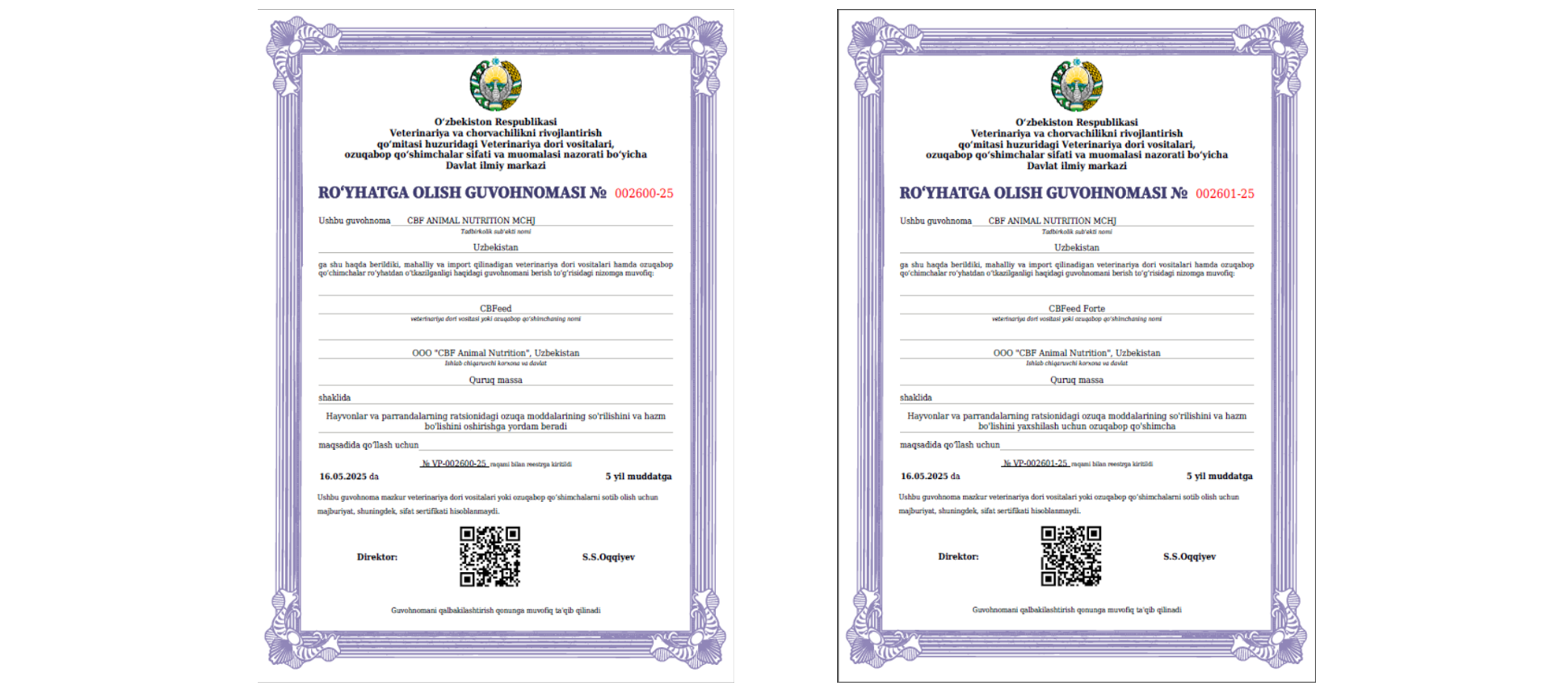

Registration of CBFeed and CBFeed Forte Feed Additives

On May 16, 2025, CBF Animal Nutrition completed the registration of the CBFeed and CBFeed Forte feed additives.

Obtaining the registration documents marked an important milestone in the company’s development and confirmed the products’ compliance with established requirements. Both products successfully completed the necessary registration procedures and received official authorization for circulation.

The registration of CBFeed and CBFeed Forte allows the company to continue scaling production and expanding product supplies to poultry and livestock farms.

This is an important step for CBF Animal Nutrition towards industrial-scale production and the further development of its proprietary line of probiotic feed additives in the Uzbek market.

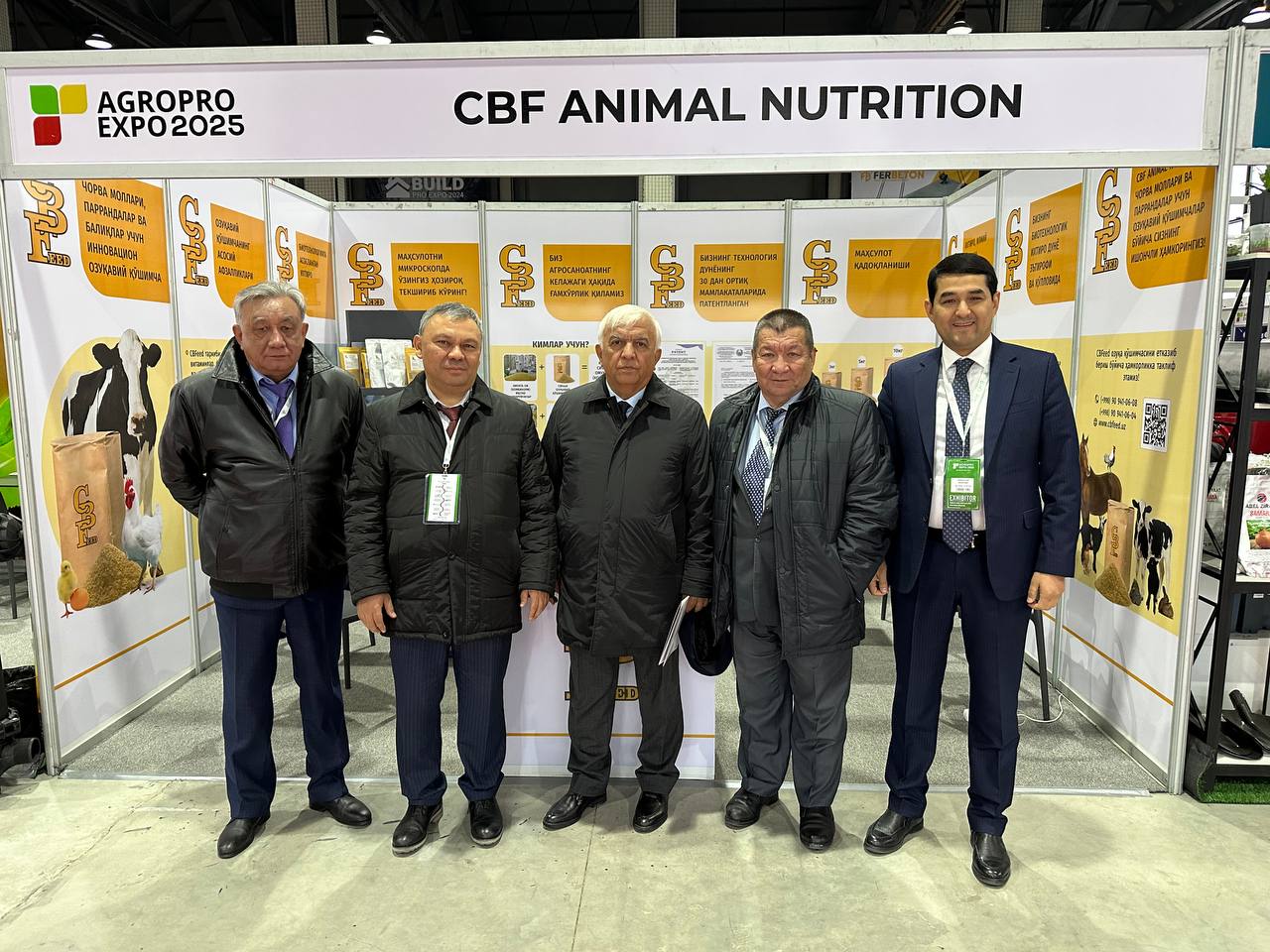
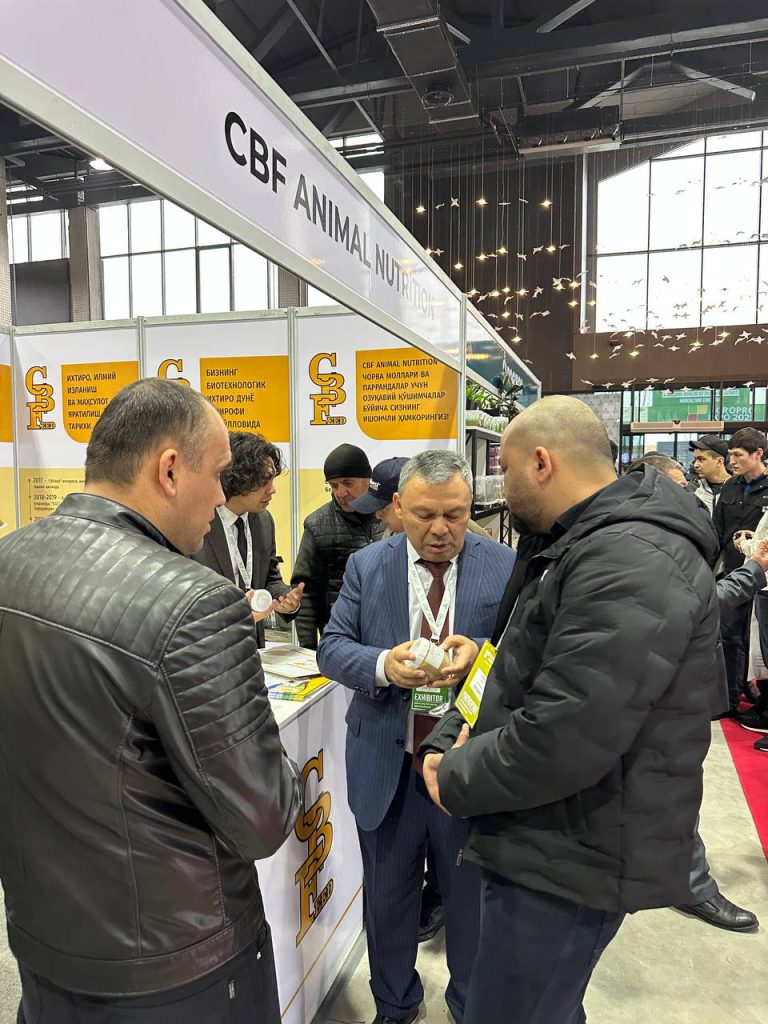
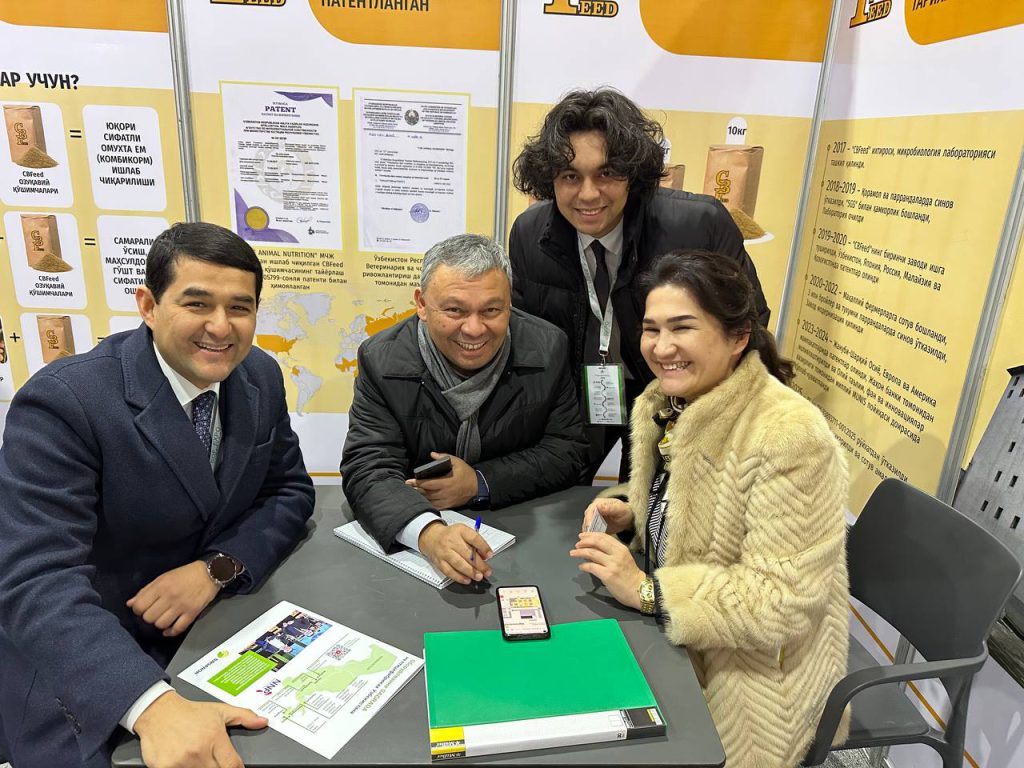
CBF Animal Nutrition Participated in Agro Pro Expo 2025 in Samarkand

On February 26, 2025, the CBF Animal Nutrition team presented its products at Agro Pro Expo 2025, an agricultural and industrial exhibition in Samarkand and one of the region’s key industry events.

Booth and Presentation

The CBF booth featured the CBFeed and CBFeed Forte feed additives. As part of the exhibition’s business program, the company presented its technology to specialists from poultry and livestock farms, including a demonstration of production trial results and the economic benefits of using the products.

Results of Participation

Following the exhibition, CBF Animal Nutrition signed 5 memorandums of cooperation with representatives of the agricultural sector and established a database of potential customers from the Samarkand region and other regions.

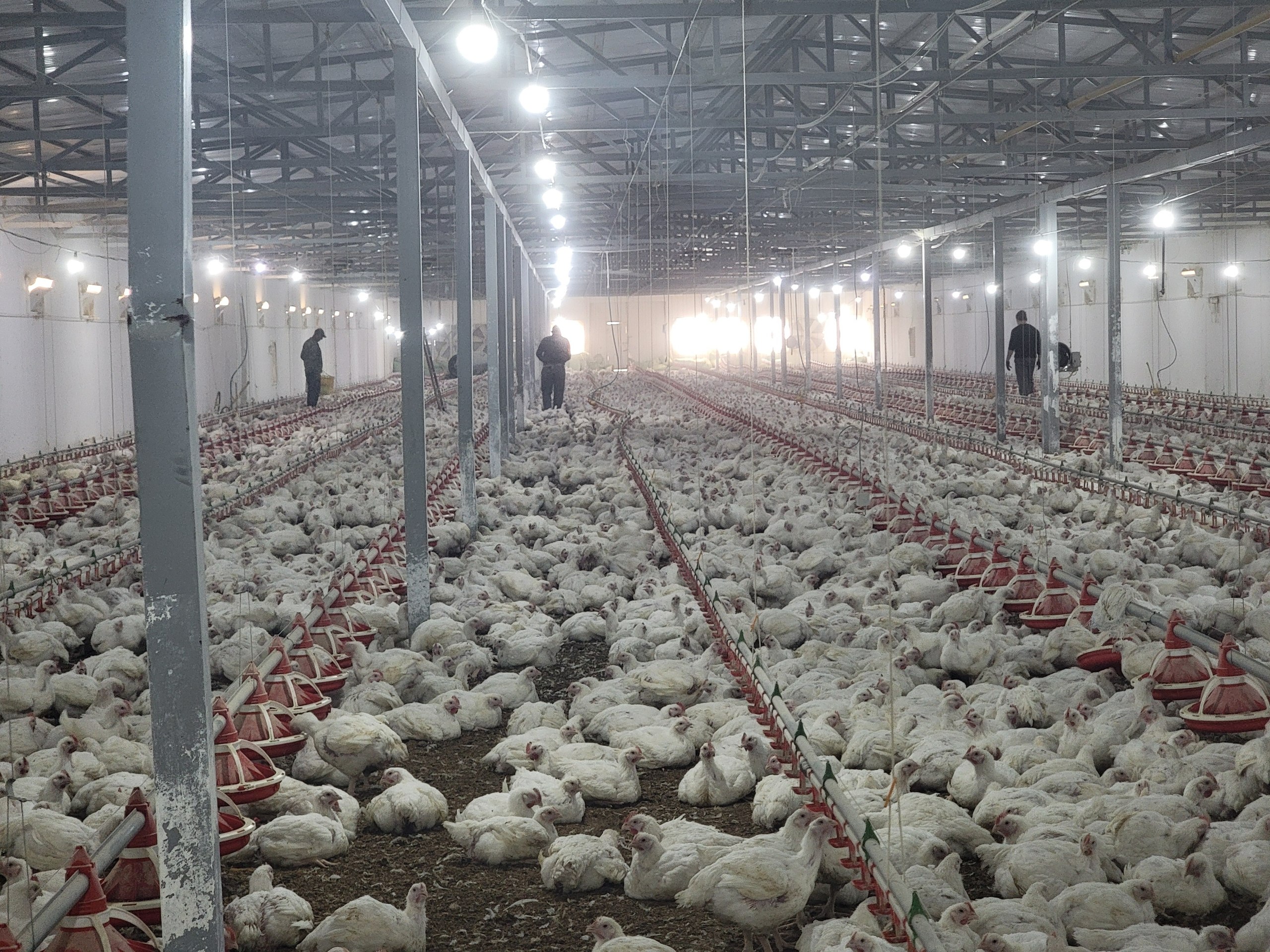
Field Trials of CBFeed on 41,000 Broilers: Results of a Joint Project with Poultry Management

CBF Animal Nutrition completed production trials of the CBFeed feed additive on a population of 41,000 broiler chickens in cooperation with Poultry Management. The trials were conducted under real production conditions throughout the full production cycle of 42 days — from the first days of the birds’ lives to the control slaughter on November 17, 2024.

Methodology

CBFeed was introduced into the broilers’ diet from the first days of life, at a dosage of 2.5–5.5% of the feed weight during the final week of the growing cycle. To ensure objective results, the control slaughter was carried out on 15 randomly selected chickens, selected by representatives of both parties. Throughout the entire cycle, the birds’ gastrointestinal tract and overall physiological condition were also monitored.

Results

The trials demonstrated a stable positive effect across key production indicators:

  • Average daily weight gain increased by 7.1–11.5%
  • Growth rate increased by 1.3–5.5%
  • Feed conversion decreased by an average of 115.35% — the FCR improved from the standard 1.5 to 1.3
  • Yield of individual carcass parts increased by 3–11%

Economic Effect

The economic analysis showed that the use of CBFeed is economically beneficial at two levels. First, the reduction in feed conversion provides direct savings on compound feed: for every sum spent on CBFeed, the farm saves an average of 11.62 sums on compound feed. Second, due to increased productivity, every sum spent on purchasing CBFeed generates an average of 25.93 sums in additional output value. The total return per sum invested is approximately 34.97 sums of additional value.

Commission Conclusions

Following the trials, the commission recommended CBFeed for widespread use in broiler diets at the established dosage rates. It was also specifically noted that the use of the additive throughout the entire production cycle did not have a negative effect on the gastrointestinal function of the birds.

CBF Animal Nutrition Becomes a World Bank Grant Recipient Under the BIRD Program

CBF Animal Nutrition has been selected as one of the 20 winning companies in the World Bank’s BIRD (Business and Innovation for Research Development) program under the MUNIS project. The grant amount is $579,000.

The BIRD program supports innovative projects with potential for industrial scaling and commercialization. The competition is held with the support of the Ministry of Higher Education, Science and Innovation of the Republic of Uzbekistan.

What will be implemented under the project

Over 18 months, CBF Animal Nutrition will use the grant funds in three key areas.

The first is the construction and launch of a production facility with a capacity of up to 300 tons of feed additives per month. The facility will be equipped with its own quality control system at every stage of the production cycle.

The second is conducting field trials under real production conditions in Uzbekistan and Kazakhstan. The goal is to confirm the product’s effectiveness on an industrial scale and collect data for further optimization.

The third is commercializing the product through partnerships with poultry farms, livestock farms, and feed mills. The minimum target revenue for the project is $107,000, in line with the BIRD program’s commercialization criteria.

About the technology

CBFeed is based on a patented technology for processing rice husk using Trichoderma culture. The fungus breaks down the cellulose in rice husk, transforming agricultural waste into a nutrient-rich substrate for the probiotic feed additive.

The technology addresses two challenges at once: it reduces feeding costs through the use of locally sourced raw materials and decreases livestock farms’ dependence on imported feed ingredients. Rice husk is an accessible and renewable resource that was previously rarely used in production and was often simply burned.

Context

The World Bank’s support confirms not only the technological viability of the project but also its economic potential for the agricultural sector of Central Asia. CBFeed was selected from competitors across different industries and recognized as one of the region’s most promising innovative solutions.